
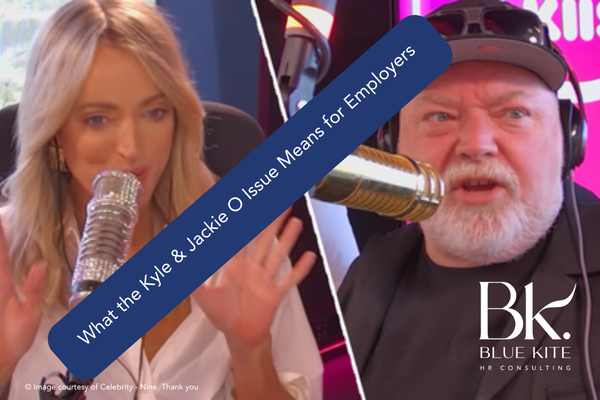
Learn what the Kyle & Jackie O means for employers, including workplace culture, psychological safety, contract clauses, employee support, and how to reduce workplace risk.
The recent Kyle & Jackie O issue has sparked strong public reaction and raised important questions about workplace culture, psychological safety, leadership behaviour, and employer responsibility. I was also interviewed on Ticker on this topic and shared commentary on social media because this is about more than headlines. It is a reminder for employers to take workplace conduct, risk, and culture seriously.
For business owners and leaders, this is not just a media story. It is a practical example of why workplace culture, employee wellbeing, and clear behavioural expectations matter.
Why this matters for workplace culture and employers
When high-profile workplace conduct issues become public, they can damage more than reputation. They can affect:
- Workplace culture and employee trust
- Psychological safety at work
- Staff engagement and retention
- Brand reputation and stakeholder confidence
- Legal and compliance risk
Employees notice how leaders respond. They watch whether concerns are taken seriously, whether standards are applied consistently, and whether the business acts early or waits until the issue becomes bigger.
Key workplace lessons for business owners
There are several clear lessons for employers from situations like this.
1. Workplace culture is shaped by what leaders tolerate
A healthy workplace culture is not built by a values statement alone. It is built by what leaders allow, ignore, excuse, or address. If poor behaviour is overlooked because someone is influential, profitable, or high-profile, that sends a message to the rest of the business.
2. Psychological safety at work must be genuine
If employees do not feel safe to raise concerns, issues often stay hidden until they escalate. Businesses need reporting pathways that are trusted, clear, and free from fear of retaliation.
3. Workplace policies need to be lived, not just written
Many employers have policies on paper, but they are not embedded in leadership practice. Policies on bullying, harassment, discrimination, code of conduct, and complaint handling need to be current, clear, and actively used.
4. Leadership capability reduced workplace risk
Managers need to know how to respond when concerns are raised. Delayed action, poor communication, emotional responses, or lack of confidentiality can increase legal risk and damage trust.
What employers do now
If this issue has made you think about your own business, there are practical steps you can take.
Review your workplace policies and processes
Make sure you have:
- A current code of conduct
- Clear workplace behaviour expectations
- Bullying and harassment policies
- Complaint handling and investigation procedures
- Training for leaders and managers
- A current WHS policy that includes psychosocial safety and processes that support psychological safety at work
Assess your workplace culture honestly
Ask yourself:
- Do employees feel safe speaking up?
- Are standards applied consistently across the business?
- Are poor behaviours addressed early?
- Do leaders role model respectful behaviour?
A policy review is important, but a culture review often tells you where the real risk sits.
Act early when concerns are raised
Early intervention matters. That may include:
- Listening carefully to concerns
- Protecting confidentiality where possible
- Assessing risk quickly
- Investigating appropriately
- Taking fair and proportionate action
How to support employees during workplace conduct issues
Supporting individuals is a critical part of managing workplace conduct concerns. That includes the person raising the issue, the person accused, witnesses, and any team members affected by the situation.
Practical support may include:
- Access to counselling or an Employee Assistance Program
- A clear internal contact person
- Regular wellbeing check-ins
- Temporary changes to reporting lines or work arrangements
- Protection from victimisation or retaliation
Support should be practical, not just a process. Employees need to know the business is taking both the individual’s wellbeing and the process seriously, and that they have a safe space to discuss concerns openly.
Agreement clauses that help manage workplace risk
Employment Agreements cannot prevent every issue, but the right clauses can help set expectations and support action when problems arise.
Depending on the role and the business, agreements may include clauses covering:
- Compliance with workplace policies and procedures
- Code of conduct obligations
- Confidentiality requirements
- Reputation and brand protection
- Social media and public commentary expectations
- Lawful and reasonable directions
- Serious misconduct and disciplinary consequences
- Respectful behaviour and workplace safety obligations
These clauses should align with your policies and be drafted carefully. Expectations need to be clear, practical, and enforceable.
How to mitigate workplace risk as much as possible
No employer can remove all workplace risk, but you can reduce the likelihood and impact of issues by being proactive.
Key risk mitigation steps may include:
- Set clear behavioural expectations from day one.
- Train leaders to respond to concerns early and appropriately.
- Keep workplace policies current, legally compliant and used.
- Create safe and trusted reporting pathways.
- Investigate complaints properly and fairly.
- Document actions, decisions, and outcomes.
- Review workplace culture regularly, not just compliance documents.
- Seek external HR or legal support when matters are sensitive or complex.
Final thoughts on workplace culture, risk and employer responsibility
The Kyle & Jackie O issue is a reminder that workplace risk is not only about legal compliance. It is also about leadership, culture, employee wellbeing, and whether people feel safe at work.
The businesses that manage these situations best are the ones that do the work before a problem arises. They set expectations clearly, support people properly, and act early when something is not right.
If you are unsure whether your workplace policies, contracts, leadership capability, or reporting processes are strong enough, now is the time to review them.






 +61 (0) 409 545 634
 catie@catiepaterson.com.au
