
From December 1, 2025, Victoria joins the rest of Australia in enforcing psychological safety laws, putting workplace wellbeing front and centre for every business
But even before this milestone, every employer nationwide has a legal responsibility to manage psychological risks under work health and safety (WHS) laws. For small and medium businesses, this isn’t about red tape – it’s about protecting your people and your business.
What is Psychological Safety?
Psychological safety means actively managing work-related risks that can harm mental or physical health. These hazards can include:
- Excessive or unpredictable workloads
- Unclear job roles or conflicting expectations
- Bullying, harassment, or aggression
- Isolated or unsupported work
- Lack of recognition or support
- No control over how work is done
- Poorly managed change
- Exposure to traumatic events or customer aggression.
Why Victoria’s Change Matters – And Why It’s National
From December 2025, WorkSafe Victoria expects employers to show clear, documented efforts to manage psychosocial risks through risk assessments, staff consultation, practical controls, training, reporting, and regular review. But this approach is already in place across most of Australia. Inspectors are increasingly focusing on psychological safety, and penalties for non-compliance are steep.
The Risks of Ignoring Psychological Safety
Failing to address psychosocial hazards can lead to:
- Improvement or prohibition notices
- Fines (up to millions for serious breaches)
- Prosecution of directors or officers
- Expensive, complex WorkCover claims
- Civil claims and reputational harm.
Doing nothing is far riskier – financially and legally – than taking simple, proportionate action.
Spotting Hazards in Your Workplace
Psychosocial risks rarely announce themselves. Warning signs include:
- High turnover or absenteeism
- Frequent complaints about workload or fairness
- Staff showing visible stress or withdrawal
- Unmanaged customer blow-ups
- Confusion about roles
- “Always on” expectations
- Bullying or incivility
- Change fatigue.
A short, honest conversation with your team can reveal more than any survey.
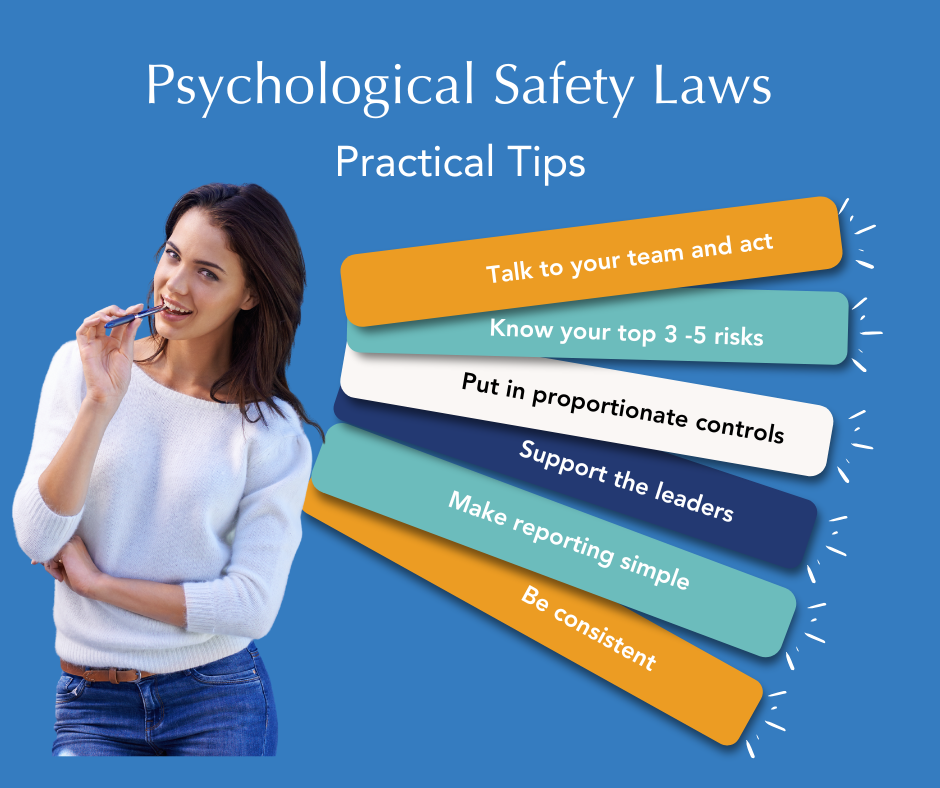
Practical Tips for Small Business
You don’t need a big HR department – just some simple, repeatable steps:
- Talk to Your Team—And Act:
- Regular check-ins (even 10 minutes) on workload, stress, and behaviour
- Listen, spot themes, and make at least one visible change.
- Know Your Top 3–5 Risks:
- Use existing info (incidents, feedback, complaints) to identify main hazards.
- Put in Proportionate Controls:
- Set limits on workload, clarify roles, define acceptable behaviour, and introduce practical supports.
- Support Your Supervisors:
- Brief managers on spotting risks and having supportive conversations.
- Make Reporting Simple:
- Clear ways to raise concerns, protect privacy, and follow up.
The Benefits of Getting This Right
Managing psychological safety well means:
- Lower turnover and absenteeism
- Reduced insurance and claim costs
- Better customer service
- Stronger reputation
- Healthier, more engaged employees
Victoria’s new law is a reminder: psychological safety isn’t a “nice to have” – it’s an essential business practice. Protect your people, protect your livelihood, and make psychological safety business as usual.






 +61 (0) 409 545 634
 catie@catiepaterson.com.au

